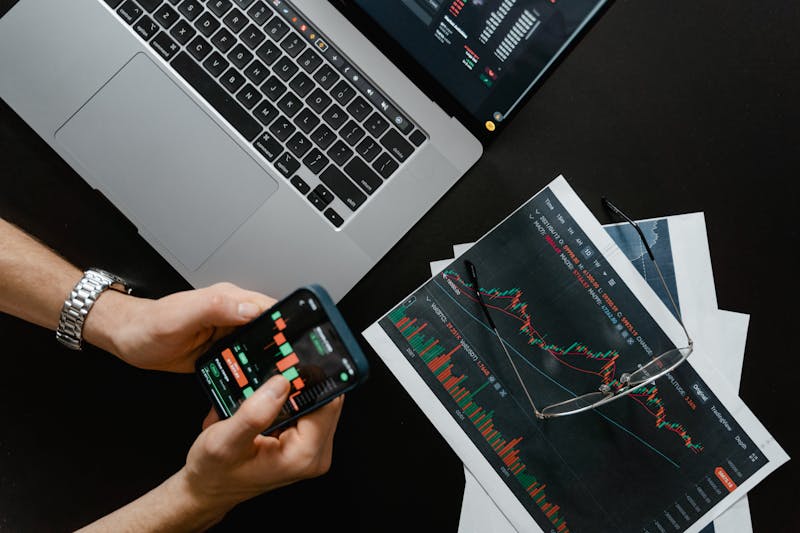
Traditional technical analysis relies on interpreting historical patterns and shapes. However, in the era of streaming data, this becomes insufficient. How can we anticipate, not just react?
Modern trading platforms no longer process just price and volume, but a continuous flow of order signals, social media sentiment, real-time macroeconomic data, and even geopolitical information. Data motion algorithms are what filter this noise, identifying trends milliseconds before they become evident on the chart.

Architecture of a Predictive System
A robust predictive analysis system rests on three main pillars:
- Ingestion Layer: Captures data from disparate sources (exchange, APIs, news) and normalizes it into a unified stream.
- Processing Layer: Applies machine learning algorithms to detect anomalies, correlations, and weak predictive signals.
- Action Layer: Transforms insights into clear trading signals, with automated risk management.
The major problem is not generating signals, but filtering false positives. This is where advanced momentum technical indicators come in, acting as an immune system for the portfolio, validating or rejecting opportunities identified by predictive algorithms.
Practical Conclusion
Moving from reactive to predictive analysis does not mean replacing the trader, but empowering them. The goal is to create a symbiotic system where human intuition and machine calculation speed collaborate to optimize risk-adjusted returns.